





Técnicas Reunidas is participating in a research project aimed at developing new photovoltaic technologies to reduce energy costs through circular economy strategies.
Society currently requires immediate mitigation actions regarding climate change and energy dependence on fossil fuels from regions with geostrategic conflicts or human rights concerns. To address the former, the European Union established the long-term strategy for 2050, “A Low-Carbon Economy,” which aims to lead Europe to achieve net-zero greenhouse gas (GHG) emissions by 2050.
In support of this strategy, renewable energy sources are seen as the greatest hope, and within this category, solar photovoltaic (PV) energy will play a fundamental role, as noted by major international organizations in their reports on energy outlooks and scenarios for 2050 (IRENA, SPE, IEA).
Solar PV deployed more capacity than all other power generation technologies, including fossil fuel-based generation, in 2021. However, solar energy still covers only a small portion of global electricity demand—around 4%—while more than 70% of global energy generation comes from non-renewable sources. For this reason, it is necessary to increase the adoption of this energy source immediately, and to that end, one of the key factors is—and will remain so for many years—the reduction in the cost of generating this type of energy, without losing sight of the fact that cost improvements and the deployment of renewables must be achieved while considering their manageability through storage for integration into the electrical grid, as well as the environmental and social sustainability of the technology, affecting the durability, reparability, and recyclability of PV products and systems.
In this regard, the project titled “New Generation of Photovoltaic Technologies for Reducing Energy Costs through Circularity Strategies,” whose acronym is “SUNRISE PV,” proposes solutions and innovations that address this challenge across the various stages of the value chain.
The project will be carried out by a consortium led by MAGTEL, with the participation of six other Spanish companies: CEGASA, CEN SOLUTIONS, ISFOC, MONDRAGON, MUGAPE, SOLTEC, and TÉCNICAS REUNIDAS.
It is supported by six research organizations: TECNALIA, CETIM, AICIA, IKERLAN, UNIOVI, and RWDI.
The corporate R&D project in cooperation titled “New generation of photovoltaic technologies for reducing energy costs through circularity strategies” and with the acronym “SUNRISE PV,” has been funded by the Center for Technological Development and Innovation (CDTI) and supported by the Ministry of Science and Innovation as part of the 2022 call for proposals under the Science and Innovation Missions program.
This initiative, which will run until 2025, proposes solutions and innovations across the various stages of the value chain (photovoltaic module, tracker or support structure, power converter, photovoltaic inverter, storage, plant operation and maintenance), focusing research on three key areas.
The first of these relates to new materials and manufacturing processes for photovoltaic modules and other components, aiming to achieve higher conversion efficiency and lower manufacturing costs. The second aspect concerns new operation and maintenance processes for a more durable, efficient, and reliable use of photovoltaic systems.
Finally, the research covers new processes for the recovery and reuse of critical materials and components in the solar photovoltaic value chain to increase their utility and improve the technology’s environmental impact.
These three areas of focus converge on a final objective: to optimize the production of renewable energy—from photovoltaic sources—by reducing the energy and economic costs of the technology (improving the LCOE), as well as making significant progress in the efficiency, flexibility, and management of photovoltaic plants, within a framework of environmental, economic, and social sustainability.
Within the project, Técnicas Reunidas will lead research into new processes for recycling end-of-life PV module components, specifically the recovery of valuable metals for the photovoltaic industry found in photovoltaic panels whose life cycle (both primary and secondary) has ended.
The project, which has a total budget of €6.5 million, is scheduled for completion in 2025 and has been funded by the Recovery and Resilience Facility, under the European “Next Generation EU” funds.
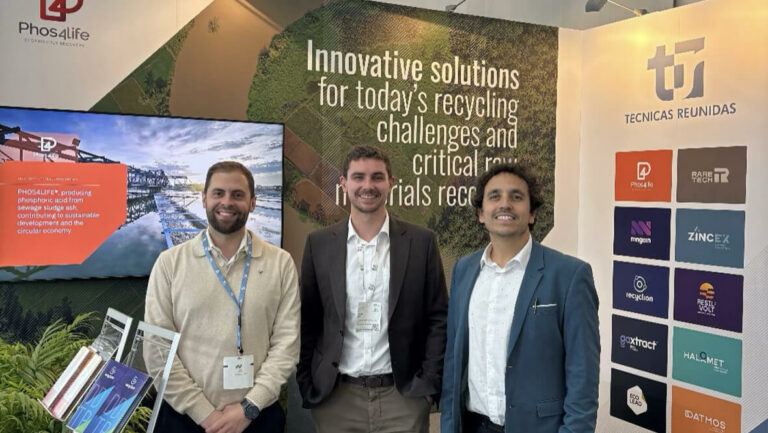
IFAT Munich 2026, recognized as the world’s leading trade fair for environmental technologies, once again brought together key international players in water management, recycling, circularity, and sustainable resource recovery. Held in Munich, the event brought together more than 3,000 exhibitors and industry professionals from over 60 countries, serving as a global platform for innovation, collaboration, and technological development in the environmental sector.
During the exhibition, Técnicas Reunidas, through its In-House Technology Development Division, had the opportunity to showcase its capabilities in the development and industrial implementation of innovative technologies focused on the recovery of metals and critical raw materials from secondary resources.
The company presented part of its portfolio dedicated to the circular economy, urban mining, and sustainable resource recovery, highlighting hydrometallurgical solutions designed to support the energy transition and improve the sustainability of industrial value chains.
IFAT Munich provided an excellent opportunity to interact with companies, institutions, and technology providers from all sectors of the environment and recycling industries. Throughout the event, the Técnicas Reunidas team exchanged ideas and discussed current challenges and opportunities related to circularity, strategic raw materials, and advanced recycling solutions.
The participation also reinforced the company’s commitment to developing technologies that contribute to resource efficiency, waste recovery, and the transition toward a more sustainable and circular industrial model.
Técnicas Reunidas would like to thank everyone who visited the booth and shared valuable conversations during the event.
See you again at IFAT 2028.
#IFAT2026 #CircularEconomy #CriticalRawMaterials #UrbanMining #EnergyTransition #Innovation #Sustainability
The European PERMANET project is making progress in developing innovative solutions to improve the recovery of critical raw materials from electronic waste and industrial materials, helping to reduce Europe’s dependence on imports and strengthen its strategic autonomy.
In a recent interview, Peter Fleming Rubio, PERMANET Project Coordinator representing Técnicas Reunidas, highlighted the company’s key role as project coordinator, leading its overall implementation, governance, and alignment with European Commission and industry standards. He also emphasized the importance of comprehensive management to ensure quality, risk mitigation, and the project’s long-term impact.
In addition to its coordination role, Técnicas Reunidas leads Work Package 3 – Hub 1, focused on the sustainable supply of rare earths. In this area, it is driving the development and scaling up of its proprietary RARETECH™ technology, aimed at producing rare earth carbonates and oxides from monazite concentrates sourced from various sources, including primary deposits and secondary materials. This process yields commercially viable products free of radioactive components, contributing to a safer and more sustainable supply chain.
PERMANET is structured around three technology hubs covering the entire value chain: from the sustainable supply of rare earths, through circular innovation in recycling, to the advanced production of magnets and their validation in industrial applications such as electromobility, energy, and industrial equipment.
The project stands out for its comprehensive approach, which combines research, technological development, and industrial scaling, with the aim of establishing a resilient and circular European value chain centered on rare earth permanent magnets.
Técnicas Reunidas’ participation and leadership reinforce its position as a key player in the development of technological solutions for the challenges associated with critical raw materials and the transition toward a more sustainable economy.
Técnicas Reunidas has been designated as the lead company for the PERMANET Project (PERmanent MAgnet Network for the European Transition), promoted by the European Commission (EC) under its Horizon Program, whose objective is to create the first complete European value chain for the production of permanent magnets.
This chain will include the extraction, processing, and refining of rare earths, which form the basis for the production of permanent magnets; the manufacture of the magnets themselves; and their subsequent recycling.
In addition to leading the project, Técnicas Reunidas will undertake, at its Technology Center, the development of technology that will enable the production of rare earths from minerals and secondary sources for subsequent use in the manufacture of permanent magnets.
The company has proven experience in this field, as it already supplies its own technology, RARETECH, to the market, which enables the production of rare earth concentrates in the form of carbonates from minerals.
Strategic Value and Geopolitical Risk
This is a project of high strategic value, as permanent magnets are a fundamental material for the manufacture of more than 200 product groups that are essential for digital development and the energy transition, particularly for the manufacture of motors for electric vehicles, wind generators, and transformers.
Furthermore, they are subject to high geopolitical risk. Currently, EU production of permanent magnets is extremely low, barely reaching 1,000 tons per year, and is not expected to cover more than 20% of European needs by 2030. Increasing this capacity would require a sharp rise in rare earth imports from China, the world’s leading producer, which currently supplies virtually all of the EU’s demand for these materials.
This excessive dependence on China could become even more serious in the near future, due to the growing demand for permanent magnets to drive the electrification required by the energy transition and the recent decision by Chinese authorities to restrict the export of rare earth processing technologies.
For this reason, the EC approved a Critical Raw Materials Act last year, the regulations for which were established last March, “as demand for rare earths is expected to increase exponentially in the coming years.”
A strong boost to the production of permanent magnets
The PERMANET project is part of this effort to overcome the limited production capacity and weak development of certain segments currently affecting the EU’s permanent magnet production value chain.
The project aims to increase European production of permanent magnets to 2,800 tons per year by 2037, 7,800 tons by 2040, and 21,600 tons by 2050, which would already cover nearly 50% of the EU’s needs in that year.
To this end, the project involves 34 partners (17 large companies, seven SMEs, four research centers, two universities, and four clusters from a total of eleven European countries) and will have a budget of approximately 21 million euros, with a grant of nearly 16 million. It is estimated to last 40 months.
Javier Limpo, director of the In-House Technology Development Division at Técnicas Reunidas, emphasized that “this project, which is essential for advancing European independence in the field of energy transition, will strengthen Técnicas Reunidas’ position as a technological leader in the extraction and recovery of rare earth elements.”
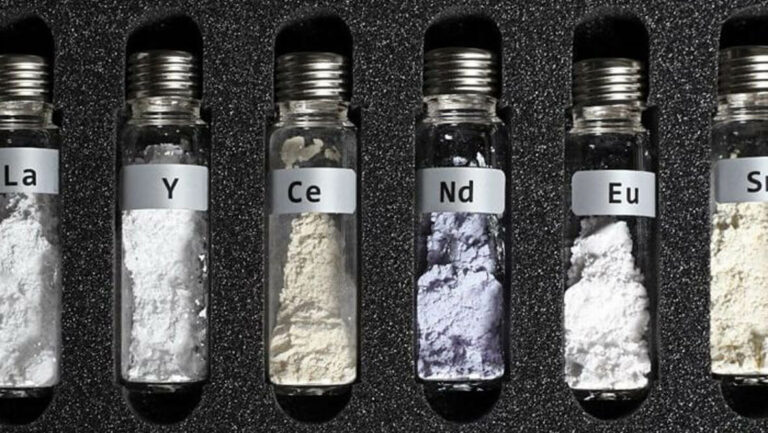
The Australian company St George Mining Limited has announced the signing of a memorandum of understanding (MoU) with Técnicas Reunidas under which it will contract the Spanish company to conduct sample processing tests at the rare earth deposit in Araxá, a town in the Brazilian state of Minas Gerais.
St George Mining is the 100% owner of this high-grade niobium and rare earths deposit, which is the largest hard-rock deposit in South America and one of the largest in the world. In fact, it is also larger than the main rare earths mine in the U.S., located in the California town of Mountain Pass.
The Australian company, which specializes in developing critical mineral recovery projects, has described the agreement as a “strategic engineering partnership to access cutting-edge European rare earth processing technology.” In particular, it has highlighted the proprietary technological solutions that Técnicas Reunidas has developed for the recovery of critical materials and, more specifically, the fact that it is the lead company in the EU-funded PERMANET project, which aims to create the first European value chain for the manufacture of permanent magnets.
Scope of Técnicas Reunidas’ work
The initial scope of the work to be carried out by Técnicas Reunidas will consist of applying RARETECH® technology for the refining of rare earth mineralization, including the production of mixed carbonate and rare earth oxides, and for the separation and fractionation of rare earth elements.
Additionally, there is a possibility that St George Mining may request additional work from Técnicas Reunidas, which would include the design of a flow diagram and an industrial plant for rare earth processing operations, among other tasks.
St George Mining, which already has its Brazil project in an advanced stage of development and has half a dozen more in Australia, has emphasized that the engagement of Técnicas Reunidas has the potential to open European markets to Araxá’s rare earths and joins the strategic alliances the Australian company has already signed with REalloys in the U.S. and with MagBras in Brazil.
John Prineas, CEO of St George Mining, stated that “we are very excited to work with Técnicas Reunidas to further evaluate the optimal processing route for Araxá’s rare earths, as their reputation and experience in this type of activity is unmatched.”
Técnicas Reunidas’ proprietary technologies for the recovery of critical materials
It is worth noting in this regard that, at the end of last February, the Spanish company also reached an agreement with the Australian firm Osmond Resources to provide RARETECH® technology for the European Union’s first comprehensive rare earth production project, which is being developed in an area of over 220 square kilometers located in the north of the province of Jaén.
RARETECH® is part of the wide range of technological solutions that Técnicas Reunidas has developed, through its In-House Technology Development Division and its Technology Center, for the recovery, processing, and refining of critical minerals and essential metals, as well as other products generated through the circular economy. These in-house technological solutions are already implemented or are being bid on in markets in the United States, Japan, Austria, Switzerland, Australia, Spain, South Africa, Brazil, and Turkey, among other countries.
In addition, the company actively participates in the development of national and international projects related to critical raw materials, particularly within the framework of the Misiones Programs of the Center for Industrial Technological Development (CDTI) of the Ministry of Science, Innovation, and Universities, and the Horizon program of the European Union.
About Técnicas Reunidas
Técnicas Reunidas is a global engineering firm that has developed more than 2,600 projects in over 70 countries throughout its 66-year history.
It specializes in the design and construction of large industrial plants dedicated primarily to the production of clean fuels, natural gas, and chemical products.
The company is also at the forefront of technologies and solutions related to the energy transition, the circular economy, and the decarbonization of facilities.
With a workforce of nearly 14,000 employees, most of whom are highly qualified engineers, Técnicas Reunidas’ headquarters in Spain is a major center of engineering excellence.
The main objective of the project is to develop sustainable technological solutions that reduce dependence on critical raw materials (CRMs) and advance toward a more resilient energy transition.
CHAINERGY was launched in response to the challenges posed by the Critical Raw Materials Act (CRMA), adopted by the Council of the European Union (EU) in March 2024.
This regulation sets ambitious targets for 2030; including extracting at least 10% of critical raw materials within the EU, processing 40% locally, and recycling a minimum of 25%, thereby reducing dependence on third countries and strengthening European strategic autonomy.
In this context, CHAINERGY aims to develop new active materials and devices for energy storage and generation, promote phosphorus recovery processes, and improve recycling technologies for end-of-life lithium-ion batteries. All of this is done with the aim of maximizing the value of available resources, reducing dependence on scarce materials, and promoting circular economy models.
CHAINERGY will investigate alternative materials—such as magnesium and manganese silicides—which are abundant, cost-effective, and have a low environmental impact, for the production of thermoelectric generators (TEGs), replacing bismuth, tellurium, or lead, which present economic, geopolitical, and environmental limitations. In this way, it will contribute to strengthening the EU’s position in a technology that is fundamental to various industrial sectors, such as the automotive and aerospace industries, within a global market projected to exceed $1.4 billion by 2030.
The project also focuses on new dry synthesis routes to develop advanced battery materials, reducing waste generation and replacing critical materials, such as cobalt or lithium, with more readily available alternatives.
As part of the CHAINERGY project, Técnicas Reunidas will drive the development of technologies for phosphorus recovery from sewage sludge and agro-industrial waste, generating high-value-added products that promote the circular economy and reduce geopolitical dependence on phosphorus, an objective considered strategic.
In addition, CHAINERGY will develop advanced technologies for safe disassembly and automatic sorting, using computer vision and computed tomography to efficiently and sustainably access the valuable materials present in batteries, which will improve recycling processes and traceability.
CHAINERGY is led by the company HI IBERIA and includes the participation of Técnicas Reunidas, Ferroglobe, Empresarios Agrupados, RIMSA, and AUTLAN. Several leading technology centers (LEITAT, CENIM, CIAE, and ICMM-CSIC) are also collaborating on the project, contributing complementary scientific expertise. The joint efforts of all these entities will ensure that the anticipated challenges are addressed comprehensively.
The project will last four years and has a total budget of €5,264,910, to which Técnicas Reunidas is contributing €1,222,876.
In summary, CHAINERGY represents a strategic commitment for Spain and for the EU as a whole, as it will contribute to achieving a more sustainable, competitive, and resilient energy transition, based on innovation, the circular economy, and the reduction of external dependencies.
Funded by the CDTI | Grant No.: MIG-20251016

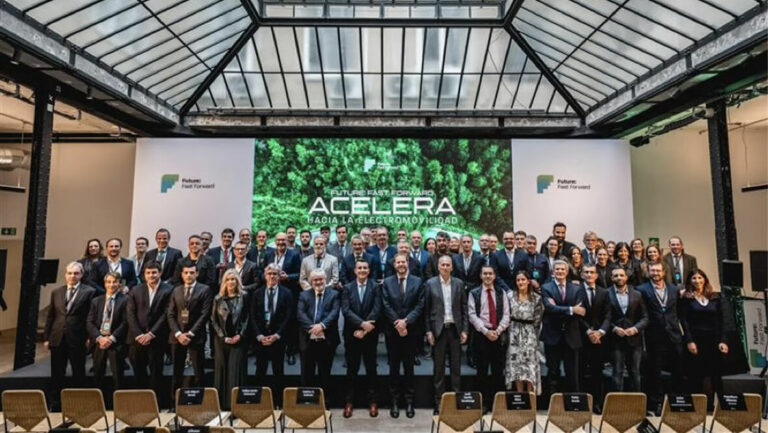
The Future: Fast Forward project has reached a key milestone in its development, with 60% of the 86 projects launched in 2022 now completed, solidifying the progress of the industry’s electrification as a tangible reality in Spain.
This initiative, considered the largest business consortium in the history of the Spanish automotive industry, is driving an unprecedented transformation aimed at making Spain a leading European hub for electromobility. Led by SEAT S.A. and CUPRA, the project brings together more than 50 companies with extensive experience across the entire mobility value chain, forming a multisectoral ecosystem geared toward an electric, sustainable, and competitive future.
With an investment of nearly 10 billion euros, Future: Fast Forward is having a significant impact on the industrial fabric, with an export capacity exceeding 20 billion euros, the creation of 145,000 direct jobs and more than 100,000 indirect jobs, as well as significant advances in training, energy efficiency, and emissions reduction.
Within this framework, Técnicas Reunidas participates in the cross-cutting circular economy sector by developing technologies for the recovery of critical raw materials and high-value metals from batteries, supermagnets in electric motors, and electronic components in electric vehicles. This contribution enables progress toward more sustainable production models, facilitating the recovery of strategic materials and closing the loop within the automotive value chain.
The progress achieved to date reinforces Spain’s position not only as a production hub but also as an environment capable of designing, developing, and scaling globally competitive industrial solutions in the field of electric mobility.